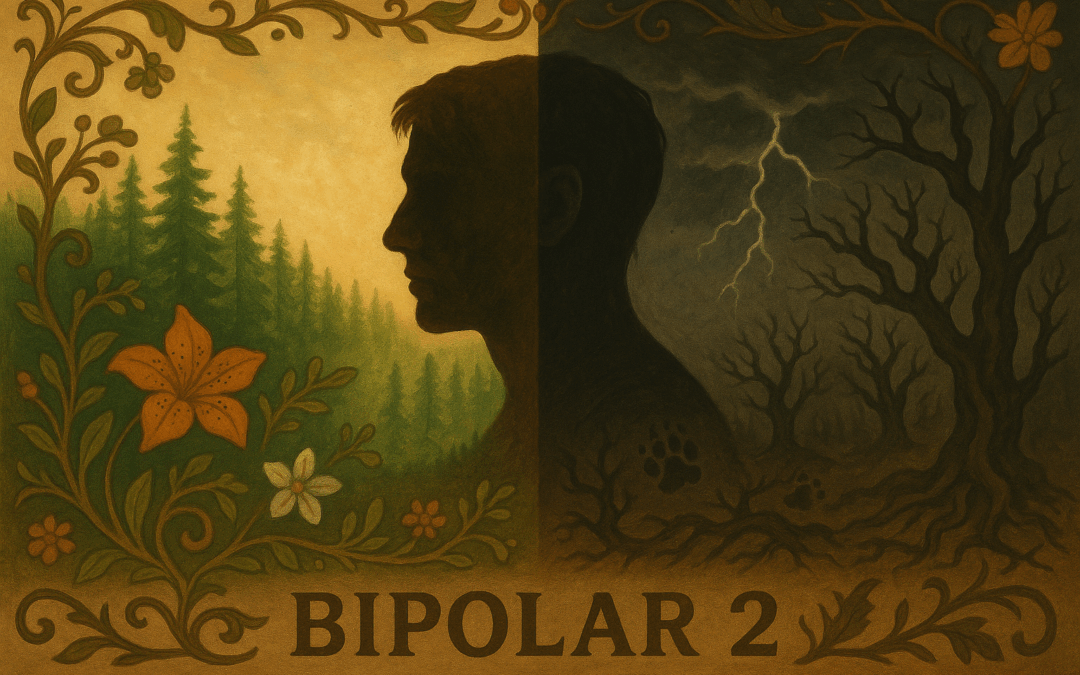
If you read my first blog post or know me well, a little over a year ago, I was officially diagnosed with Bipolar 2 Disorder. I say officially because after doing therapy and learning about the signs, I’ve seen the signs most of my life. Long before anyone gave it a name. As far back as I can remember, I’ve wrestled with overwhelming emotions, extreme shifts in energy, anger, and focus, and a pattern of mental highs and lows that didn’t quite make sense. For years, I assumed this was just how my mind was wired. Sometimes on fire with brilliant ideas and drive, and sometimes stuck in a fog so thick I barely wanted to do anything.
Being diagnosed was both a relief and a challenge. I was given clarity and, finally, a way to explain something I’d been quietly battling with for years. For several years, I drank alot. To the point, people could see it in my eyes when I was not there. But the drinking made my mind stop racing, and the chatter went away. But with this diagnosis, it meant I had to start facing it. Learning about Bipolar 2 meant unlearning a lot of shame I’d carried and beginning the hard work of managing my mental health intentionally.
Understanding Bipolar 2
People often misunderstand Bipolar 2, and I find myself constantly explaining that it doesn’t involve the full manic episodes associated with Bipolar 1. The reality is more complex and often invisible to others.
I remember a moment that put this into perspective. This past March, I made a stop at a local gas station to get some gas. The day before, it was 60 degrees and sunny, warm enough for shorts and T-shirts. But overnight, the temperature dropped to 20 degrees. When I went to pay for my gas, a few people were joking about the weather, saying, “Minnesota weather is so bipolar. People are getting sunburns one day, frostbite the next.”
At that moment, I froze. I wasn’t sure if I should laugh it off or feel offended. People were casually using the word bipolar to describe something unpredictable and inconsistent, but living with Bipolar 2 means so much more than that. It’s not just mood swings. It’s a continuous ride of exhaustion, and you cannot get off. It’s an ongoing cycle of managing thoughts, emotions, relationships, and energy that goes unseen by everyone except those close to me.
That exchange reminded me how important it is to explain what Bipolar 2 means and to raise awareness about the challenges it brings.
Bipolar 2 in Real Life
The challenges that come with bipolar 2 can be features such as hypomania, this is a state of elevated moods and energy that can feel exciting, productive, and even euphoric. But it doesn’t last, and it often comes at a cost. For me, hypomania means I get hyperfocused, impulsive, overly optimistic, and then suddenly irritable. And once the high wears off, the crash hits. Depression comes in heavy, and it brings exhaustion, hopelessness, brain fog, and guilt.
These cycles can make daily life unpredictable. One week, I feel unstoppable. Next, I’m questioning everything about myself. This constant shift affects how I interact with others, especially those closest to me.
The Impact on Relationships
Mental illness does not just live inside your head. It can affect every part of your life. My moods, energy levels, and ability to connect are all influenced by where I am in the cycle. It affects how I interact with family, communicate with loved ones, and show up for the people around me.
Before meds, my mind was a wild, scary place. It was constantly racing and filled with what I now know as chatter. It was constant chatter. Sometimes, I found myself thinking things without saying them out loud or saying things out loud without realizing I did. This rapid flow of thoughts was confusing and tiring, not only for me but also for those around me who may struggle to follow or understand.
When I am feeling low, I often experience deep mistrust not just of situations but of people. I question everything and everyone. Paranoia can take hold, making it difficult to trust even those who have always been supportive of me. I get caught in repetitive thoughts such as, “They are getting tired of this,” or “What if they leave?” even when there is no real reason to believe it. Depression distorts perception, and logic does not always prevail.
Because of this fear, I can become emotionally clingy. I want to prove that I am still worthy of love and try to do everything I can to make up for the burden I bring. I check in constantly, become overly attentive, and try to anticipate every need. Although these actions come from a place of love and fear, they can become exhausting for those around me, especially for Melanie.
On the other hand, when mistrust and paranoia grow too strong, I shut down completely. I avoid people, isolate myself, and stop sharing what I am feeling. I do not want to be a burden and convince myself that keeping a distance is safer for everyone. But this only deepens loneliness and reinforces the belief that I am too much.
Melanie is the closest person to me and has been incredibly patient. She can see the layers beneath the silence, the overreactions, and the emotional spirals. She does her best to support me through the hardest times. Still, I would be lying if I said it is easy for anyone involved. This illness affects relationships deeply and requires intentional effort to maintain open communication to continue choosing connections despite the challenges.
The ADHD Question
Lately, another piece of the puzzle might be coming into focus. My med management therapist recently brought up the possibility of ADHD. I haven’t done a formal assessment yet. Still, she’s noticed things I’ve been describing that sound familiar to her that are not being taken care of with the meds I am taking. Some of these things are disorganization, racing thoughts, poor time management, and a brain that never really slows down.
I have always wondered about ADHD and myself. I had this picture in my head of what it looked like, and I always saw it as something I had. But now, I’m starting to connect the dots a little more. A lot of what I’ve struggled with might not just be Bipolar 2. It could be something else acting alongside it, adding to the chaos.
If ADHD is part of this, it would explain why I can’t always focus, why I jump from task to task, and why I feel overstimulated and mentally scattered even on a “good” day. It adds another layer to the learning I’m doing about my brain, my triggers, and how to manage my daily life.
Daily Management and the Work of Relearning
Living with Bipolar 2 means constantly checking in with myself. It means paying attention to the early signs, such as increased energy, lack of sleep, irritability appearing out of nowhere, and a loss of interest in things I normally enjoy. I used to attend therapy regularly, but due to insurance issues, I am currently navigating stuff on my own, which makes the process even more challenging. For me, that means tracking my moods, building structure into my days, and staying committed to self-reflection and healing, even when I don’t feel like doing the work.
I’ve had to do a lot of learning and just as much relearning over and over again. Some things that helped last month may not be effective today. Some triggers change. Some stay the same. I have to remain flexible, which isn’t easy when I already feel like I’m holding on to a thread some days.
There’s no perfect routine, no magic fix. Just small tools, daily practices, honest conversations, and a growing awareness of how this all works inside me. I’ve had to unlearn shame and relearn self-compassion, which is not an easy task. I’ve had to accept that healing isn’t linear and that success might mean getting through the day.
Final Thoughts
If you’re walking a similar path with Bipolar 2, ADHD, or something else, know that you’re not alone. Mental health isn’t always visible, but that doesn’t make it any less real. Diagnoses don’t define us, but they do give us a starting point when it comes to healing.
“Me, myself, and Bipolar 2” may sound like a mess some days. Still, it’s also a story of survival, a story of paying attention, showing up, and trying again. And I’m still writing my own story, one day at a time.
Thanks for being here with me.
— Tim